
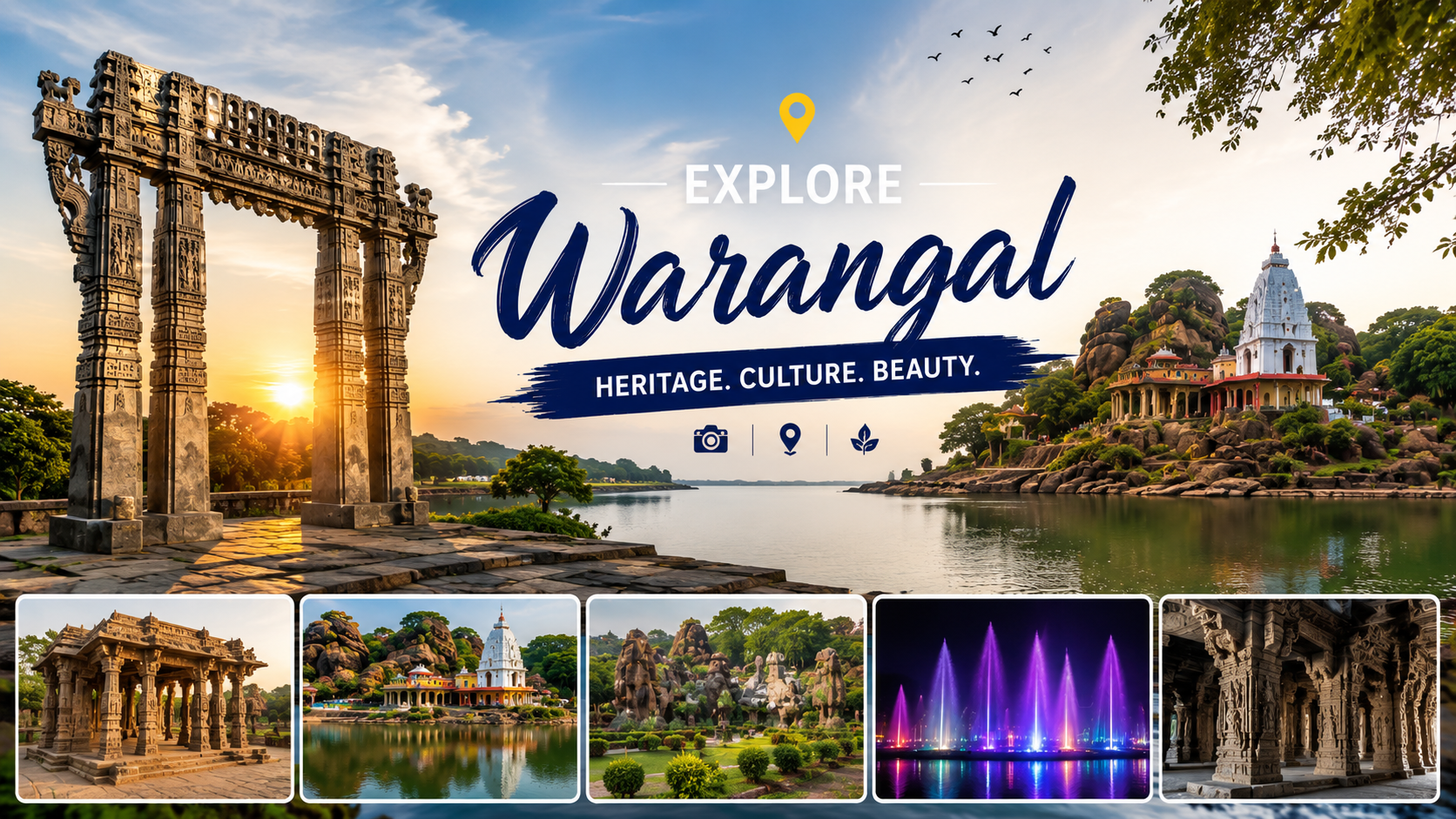
5 Best Tourist Places in Warangal You Shouldn’t Miss
Some destinations attract travelers with beaches. Others are known for mountains, forests or modern city life. Planning to visit Tourist Places in Warangal? Check the official Telangana Tourism guide for more information about the city’s attractions, heritage and travel highlights.
Warangal has a different story to tell.
Here, history isn’t locked away inside a museum. Instead, it stands in the middle of the city. It appears in enormous stone gateways, beautifully carved temples, old sculptures, peaceful lakes and centuries-old structures that continue to connect today’s travelers with Telangana’s past.
Warangal and nearby Hanamkonda were once an important centre of the Kakatiya dynasty, one of the most influential medieval kingdoms of the Deccan. Moreover, the Kakatiyas played an important role in developing the region’s architecture, irrigation systems, temples and cultural traditions.
Their legacy can still be seen across the Warangal region. Therefore, for today’s traveler, a visit to Warangal can be much more than ordinary sightseeing.
For example, you can explore a historic fort in the morning, study intricate temple carvings later, enjoy a local Telangana meal in the afternoon and finish the day beside a peaceful lake. Furthermore, you don’t necessarily need a long holiday to experience the city’s history and culture.
If you’re looking for tourist places in Warangal for a short trip, these five destinations are an excellent place to begin. Each offers something different, from history and architecture to nature, culture and peaceful surroundings.
1. Warangal Fort — Historical Tourist Places in Warangal
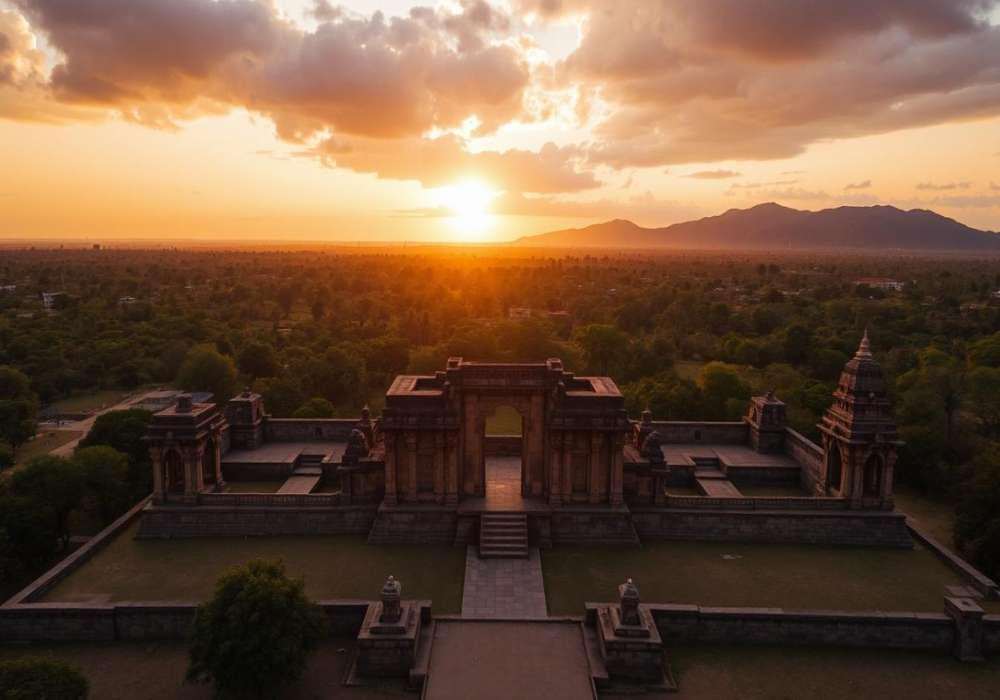
If you visit only one heritage attraction in Warangal, make it the Warangal Fort.
Imagine entering a city where enormous stone gateways once announced the presence of a powerful medieval kingdom. That is the feeling you get at Warangal Fort. Today, much of the fort survives as ruins; however, those ruins still tell an impressive story.
The fort was developed during the reign of the Kakatiya dynasty and became closely associated with Warangal’s importance as a political and cultural centre. Moreover, rulers such as Ganapati Deva and Rudrama Devi played important roles during the period when the Kakatiya kingdom was at its height.
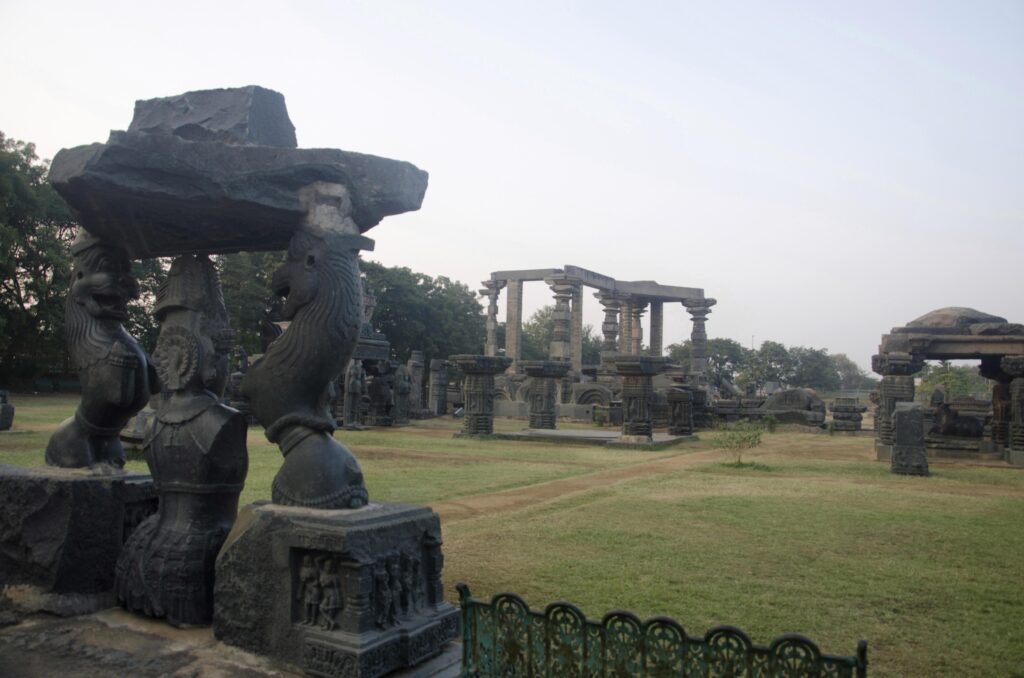
The fort’s architecture reflects the engineering and artistic skills of the period. Visitors can still observe the impressive stonework and architectural details that highlight the craftsmanship of the Kakatiya era.
Its most famous feature is the enormous Kakatiya Kala Thoranam, or stone gateway. Furthermore, four monumental gateways are traditionally associated with the fort complex, and their distinctive design has become one of the best-known symbols of Telangana’s Kakatiya heritage.
For history and architecture lovers, Warangal Fort offers more than a glimpse of ancient ruins. Instead, it provides an opportunity to understand the region’s royal past and appreciate the remarkable craftsmanship that has survived through the centuries.
A Glimpse Into Its History
Warangal was not always known simply as a historic tourist destination. During the Kakatiya period, it was an important seat of power. The Kakatiyas strengthened the city and developed it as a major political centre in the Deccan. Moreover, their rule is remembered for temple architecture, irrigation works, fortified settlements and artistic achievements. The fort reflects this period of ambition.
Although time and later conflicts changed the appearance of the complex, the surviving structures still allow visitors to imagine the scale of the original city. Furthermore, walking around the ruins gives you a sense of how architecture and defence were brought together.
Massive walls protected important areas, while monumental gateways created an impressive entrance. In addition, the remaining stone structures provide glimpses into the engineering skills and architectural vision of the Kakatiya period.
For visitors interested in history, Warangal Fort offers more than ancient ruins. Instead, it provides an opportunity to understand how the Kakatiyas shaped Warangal into an important political and cultural centre.
What Makes the Architecture Special?
The fort is not simply a collection of old stones. Look closely at the craftsmanship. The gateways feature geometric forms and sculptural details characteristic of Kakatiya architecture. The stone surfaces have weathered over centuries, giving them a character that modern buildings simply cannot reproduce.
The contrast between the old stone structures and the open sky also creates a powerful visual experience.
Why visit?
- See the famous Kakatiya stone gateways
- Explore the historic fort complex
- Photograph the impressive stone architecture
- Learn about Warangal’s Kakatiya heritage
- Enjoy a relaxed walk around the ruins
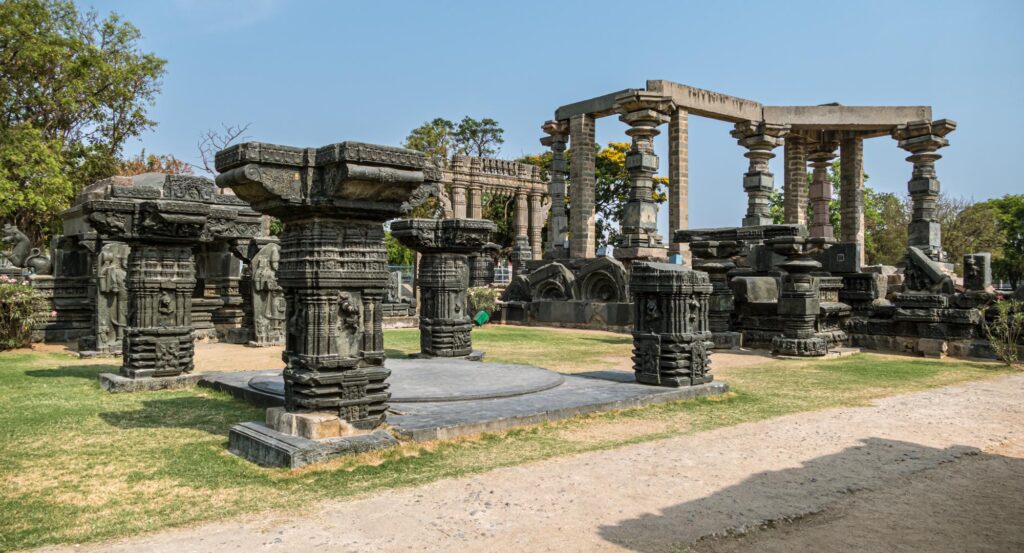
Unmapped Tip
Don’t just photograph the gateway. Look closely at the carvings and details—you’ll notice something new from different angles.
2.Thousand Pillar Temple — One of the Best Tourist Places in Warangal
Move from the fort toward Hanamkonda, and you’ll encounter another extraordinary chapter of Kakatiya history.
The Thousand Pillar Temple is one of the region’s most celebrated architectural landmarks. The temple is traditionally dated to 1163 AD, during the reign of Rudra Deva, a Kakatiya ruler. Its architecture demonstrates the sophistication of medieval temple craftsmanship and provides a fascinating look at the artistic traditions of the Deccan.
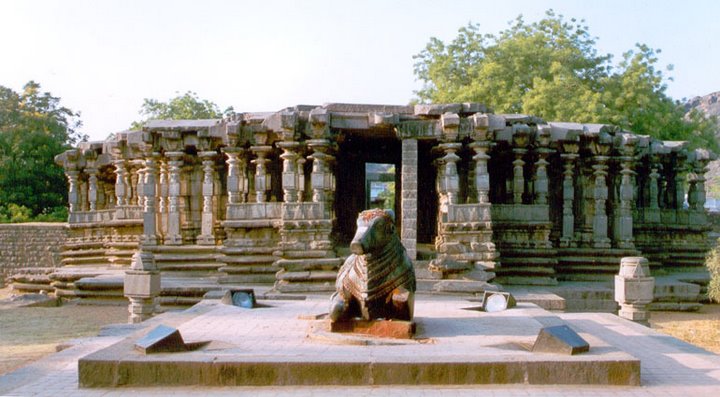
Located in Hanamkonda, the Thousand Pillar Temple is one of the most fascinating examples of Kakatiya craftsmanship in the region. The temple was built during the reign of Kakatiya ruler Rudra Deva and is associated with three deities—Shiva, Vishnu and Surya. Its detailed stone carvings, star-shaped design and large monolithic Nandi make it especially interesting for history and architecture lovers
The temple is associated with Shiva, Vishnu and Surya, reflecting a religious tradition in which different forms of worship could exist within the same architectural complex. Its design is particularly interesting because of its distinctive layout and richly decorated stone elements.
Despite the popular name “Thousand Pillar Temple,” the attraction should not be understood simply as a building with exactly one thousand visible pillars. The name reflects the temple’s celebrated forest of pillars and its architectural complexity.
The famous monolithic Nandi is another major highlight. Created from a single piece of stone, the Nandi is an impressive example of the scale and craftsmanship achieved by artisans of the period.
Why Kakatiya Architecture Matters
The Kakatiyas developed a distinctive architectural tradition that can be seen across Telangana. Their temples often combine:
That combination is what makes the Thousand Pillar Temple especially valuable to history and architecture lovers. You’re not simply looking at an old building. You’re looking at the work of craftsmen who created detailed stone architecture without the modern machinery available today.
Why visit?
- Admire detailed Kakatiya stone carvings
- See the massive Nandi sculpture
- Explore the temple’s distinctive architecture
- Capture beautiful heritage photographs
- Experience one of Hanamkonda’s best-known landmarks
3. Bhadrakali Temple — Where Heritage Meets the Lake
A Peaceful Temple Beside the Lake
After exploring Warangal’s stone monuments, Bhadrakali Temple offers a calmer experience. Located beside Bhadrakali Lake, the temple combines spirituality, history and natural scenery in one setting.
Dedicated to Goddess Bhadrakali, the temple is surrounded by rocky landscapes and greenery. The lake adds another dimension to the experience, especially when the surroundings become quieter during the morning or evening. For travelers who enjoy photographing places rather than simply ticking them off a list, this is one of the more visually interesting tourist places in Warangal.
The temple is dedicated to Goddess Bhadrakali and is surrounded by greenery and rocky landscapes. Telangana Tourism notes that its history dates back to the Chalukya period, making it an interesting destination for travelers who enjoy both spirituality and heritage.
A Temple With Centuries of History
The history of Bhadrakali Temple is traditionally associated with the Chalukya period, and the site has continued to hold religious importance over the centuries. Like many historic Indian temples, its story isn’t limited to a single date or ruler.
Moreover, the temple has been shaped by generations of worshippers, changing political periods and local traditions. This continuing connection between the temple and the local community makes visiting it different from viewing an abandoned monument. The temple’s location beside the lake further adds to its appeal. Instead of seeing only stone architecture, visitors can experience:
- Peaceful lakeside surroundings
- Historic temple architecture
- Rocky landscapes
- Opportunities for photography
- A calm atmosphere for quiet observation
The scenery changes throughout the day. For example, mornings can feel quiet and peaceful, while late afternoons bring warmer light. In the evening, the lake can create beautiful reflections and a calmer atmosphere around the water.
However, don’t restrict your visit to the main shrine. The surrounding rocky landscape and lake are also worth exploring, especially for travelers who enjoy photography and peaceful surroundings. Furthermore, the combination of spirituality, history and natural scenery gives the temple a distinctive character.
For travelers who enjoy slower experiences, Bhadrakali Temple can be one of the most relaxing tourist places in Warangal.
Why visit?
- Experience an important historic temple
- Enjoy the peaceful lakeside setting
- Photograph the temple and surrounding landscape
- Explore the natural rock formations nearby
- Take a quiet break from the city’s busy streets
4. Padmakshi Temple – A Quiet Heritage Stop in Hanamkonda
If you’re searching for a quieter side of Warangal, add Padmakshi Temple to your itinerary.
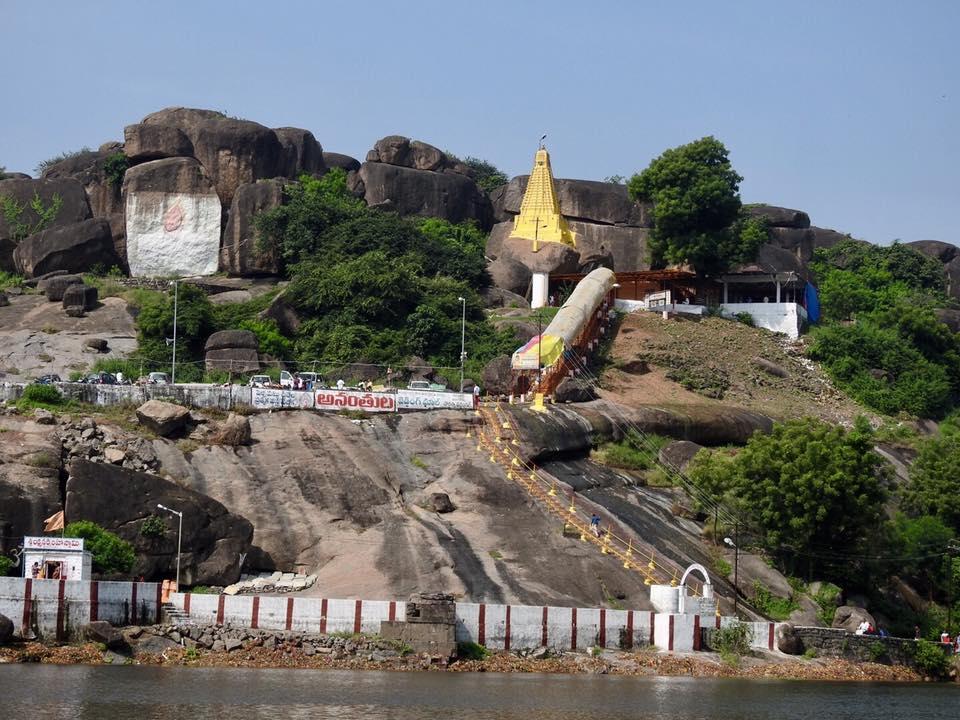
Away from some of Warangal’s better-known attractions, Padmakshi Temple offers a quieter heritage experience. Located on a hill, the temple dates back to the 12th century. One of its notable features is the Annakonda Pillar, a striking black-granite column at the entrance.
Moreover, the temple offers visitors an opportunity to explore a less crowded historical setting. Its elevated location gives the visit a different feeling from exploring larger monuments on the plains. Not every beautiful destination needs to be crowded.
Padmakshi Temple is a good example. Located in Hanamkonda, the temple provides a quieter opportunity to explore the region’s medieval heritage. It is traditionally associated with the 12th century and is considered one of the early examples of Kakatiya-era temple architecture in the area.
The temple is associated with the worship of Padmakshi and reflects the religious and artistic environment of medieval Hanamkonda. During the Kakatiya period, temple construction and stone craftsmanship flourished across the region. Therefore, Padmakshi Temple provides another piece of that larger architectural story. While Warangal Fort represents the political and military strength of the Kakatiyas, Padmakshi helps visitors understand their religious and artistic traditions.
For example, the Annakonda Pillar stands out because of its size, dark granite and craftsmanship. Although visitors may focus on the main temple, these individual elements can be equally interesting for history and architecture lovers.
Finally, the temple’s elevated location and surrounding landscape create a sense of separation from the busier parts of the city. This makes Padmakshi Temple a good choice for travelers who enjoy combining history, architecture and a peaceful atmosphere.
- Explore an old Kakatiya-era temple
- See the distinctive Annakonda Pillar
- Enjoy the elevated surroundings
- Discover a lesser-known heritage attraction
- Add a peaceful stop to your Warangal itinerary
A Different Photography Experience
At Padmakshi Temple, don’t focus only on the temple structure,
- The approach to the temple
- Stone details
- The pillar
- Architectural patterns
- Views from the elevated location
This gives your travel story more variety. If you enjoy discovering places beyond the usual tourist checklist, don’t skip this one.
5. Kakatiya Rock Garden — A Different Side of Warangal
Kakatiya Rock Garden: A Relaxed Outdoor Experience
The Kakatiya Rock Garden offers a more relaxed experience, with rock sculptures, greenery, landscaped areas and an artificial waterfall. Telangana Tourism describes it as a distinctive attraction featuring sculptures made from materials including rock, clay and metal. It is a nice choice for families, casual photography and travelers who want something different from Warangal’s historic monuments.
When Art Meets the Outdoors
After a day of temples and historical monuments, the Kakatiya Rock Garden offers a refreshing change of pace. The garden combines landscaped surroundings with sculptures and artistic installations, creating a relaxed outdoor experience. For families, casual travelers and photographers, it can be a refreshing addition to a heritage-focused Warangal itinerary. Instead of another ancient monument, visitors can enjoy greenery, sculptures and open spaces.
Most visitors think about Warangal through its forts and temples. However, the Rock Garden shows another side of the city. Here, visitors can enjoy creative sculptures, landscaped surroundings and a more peaceful outdoor setting. The garden includes sculptures created from materials such as rock, clay and metal, along with landscaped areas.
Moreover, a good travel itinerary should have variety. If every stop is a monument, the day can begin to feel repetitive. The Rock Garden gives you a chance to slow down, walk through landscaped areas and take photographs in a more relaxed setting.
What Makes Kakatiya Rock Garden One of the Best Tourist Places in Warangal?
- Explore creative rock sculptures
- Enjoy landscaped surroundings
- Take unique travel photographs
- Spend relaxed time with family
- Add variety to your sightseeing plan
- Experience a different side of Warangal
Why visit?
- Explore creative rock sculptures
- Enjoy greenery and landscaped surroundings
- Take interesting travel photographs
- Spend relaxed time with family
- Add variety to a heritage-focused itinerary
Best Places for Travel Photography
| Place | Best photography subject |
| Warangal Fort | Stone gateways & architecture |
| Thousand Pillar Temple | Carvings & heritage details |
| Bhadrakali Temple | Temple + lake |
| Padmakshi Temple | Hilltop architecture |
| Kakatiya Rock Garden | Sculptures + greenery |
Why Warangal Is Worth Exploring
Warangal isn’t only about ancient monuments.
It’s about seeing how history, architecture, spirituality and everyday life exist side by side.
You can walk beneath a centuries-old stone gateway in the morning, admire intricate temple carvings later, sit beside a peaceful lake in the evening and still have time to discover something unexpected.
That’s what makes Warangal a rewarding destination for a short trip.
Final Thoughts
You don’t always need a long vacation to discover somewhere memorable.
Sometimes, one day is enough to step away from the usual routine and discover a place with a story.
From the magnificent Warangal Fort to the peaceful surroundings of Bhadrakali Temple, these five places offer a glimpse into the heritage and character of Warangal.
So pack your camera, keep your itinerary flexible and let your next short trip take you somewhere Unmapped.
Don’t Leave Warangal Without Tasting Telangana
A trip to Warangal shouldn’t be only about monuments. Food is part of the destination.
Telangana cuisine is known for bold flavours, spices and traditional preparation methods. During your Warangal trip, keep an eye out for local dishes and snacks rather than eating only familiar foods.
